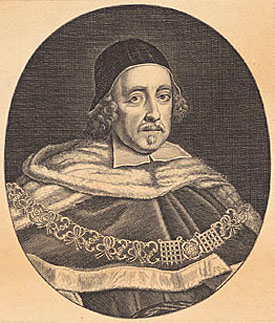
This is a blog about the history, theory and practice of the criminal law. I shall write about books, cases, trials, novels that catch my interest, and even occasionally about current events. My aim is not comment on current caselaw or issues in criminal justice, but to rather to develop a more oblique critique of the law.
Oblique intent
Why the name? Well criminal law afficionados will recognise the phrase 'oblique intent' as referring to a problem of mens rea:can a person who intends to do x (such as setting fire to a building to scare the occupants) also be said to have an intention to kill if one of the occupants dies? This is a problem that has consumed an inordinate amount of time in the appeal courts and in the legal journals, and can be taken to represent a certain kind of approach to legal theory. My approach is intended to be more oblique to this mainstream approach, and thus to raise different kinds of questions and issues. Hence the name.
Tuesday, 5 March 2013
On Correct
Regular readers, if there is such a person, will recall that I have posted in the past about the blog 'Punishing Photography' and the exhibition 'The Gallows' that came out of that project. I am now pleased to say that a public exhibition of the photos has just opened in Glasgow. Called 'Correct', you can see it at the Briggait until 22nd March. Full details here: http://www.waspsstudios.org.uk/news-events/correct-exhibition-jenny-wicks
Thursday, 14 February 2013
On marital coercion
Followers of the British press have been treated in recent weeks to the sight of the fall from grace of the senior Lib Dem politician, Chris Huhne. Huhne has recently pleaded guilty to perverting the course of justice and is likely to be sentenced to a period of imprisonment. The story was that his car was caught breaking the speed limit by a speed camera. He would have lost his licence if he admitted driving the car, and thought that this might have affected his chances of being elected to parliament. So he either asked or pressured his wife, Vicky Pryce, to declare that she had been driving and to take the points on his behalf. Unfortunately for him, at around the same time he was having an affair with his parliamentary assistant, and when he left his wife for the assistant she leaked the story about the speeding to the press. And the upshot was that both were charged with perverting the course of justice (as I write the jury is considering its verdict).
So far so predictable, but what makes the story of interest to the criminal law is that Pryce has pleaded not guilty and has put forward the rarely used defence of marital coercion.
This defence is contained in s.47 of the Criminal Justice Act 1925, which states:
It is accordingly not a surprise to find that there were proposals to reform this law from as early as 1845. In a case in 1912 a judge denied the existence of the rule, but his decision was overturned on appeal (the Court of Criminal Appeal having been established in 1906). The final blow to the old rule came with the case of R v Peel and wife in 1922 which involved a fraudulent betting scheme: the husband was convicted of the offence, but the wife (who the judge was clear had acted independently) was acquitted on the basis of the rule. As so often happens in such cases, questions were asked in Parliament, and this led to the establishment of the Avory Committee which recommended the complete abolition of the defence. Instead of this, s.47 replaced the old rule.
The new rule had certain requirements: the offence should be committed in the presence of the husband; and the coercion need not be physical but moral or psychological. All the same it is difficult to justify the existence of the rule as it seems to imply the women are weaker than their husbands and it only applies to married couples and not any relationship where this type of coercion might be exercised. So it is not surprising that the Law Commission recommended the abolition of the defence in 1977, to be replaced by the general defence of duress - though this proposal was never enacted.
Which brings us back to the present. The rule does seem strange and anachronistic, though in a world where we are perhaps more aware of the kind subtle psychological pressures that can be exercised by a dominant partner (especially in the context of domestic abuse) it is perhaps also a useful reminder that such coercion exists and might properly be recognised in some way by criminal law.
So far so predictable, but what makes the story of interest to the criminal law is that Pryce has pleaded not guilty and has put forward the rarely used defence of marital coercion.
This defence is contained in s.47 of the Criminal Justice Act 1925, which states:
“Any presumption of law that an offence committed by a wife in the presence of her husband is committed under the coercion of the husband is hereby abolished, but on a charge against a wife for any offence other than treason or murder, it shall be a good defence to prove that the offence was committed in the presence of, and under the coercion of, the husband”.This, interestingly, was a reversal of the traditional common law position, which was that a wife who committed certain crimes (excepting treason and murder) in the presence of her husband was presumed to be acting under coercion unless it could be shown that she took the initiative in committing the offence. This may have been explicable in a system of law where the woman owned no property and was assumed to be under the command of her husband, but makes little sense as women ecame more independent and were recognised as possessing equal rights.
It is accordingly not a surprise to find that there were proposals to reform this law from as early as 1845. In a case in 1912 a judge denied the existence of the rule, but his decision was overturned on appeal (the Court of Criminal Appeal having been established in 1906). The final blow to the old rule came with the case of R v Peel and wife in 1922 which involved a fraudulent betting scheme: the husband was convicted of the offence, but the wife (who the judge was clear had acted independently) was acquitted on the basis of the rule. As so often happens in such cases, questions were asked in Parliament, and this led to the establishment of the Avory Committee which recommended the complete abolition of the defence. Instead of this, s.47 replaced the old rule.
The new rule had certain requirements: the offence should be committed in the presence of the husband; and the coercion need not be physical but moral or psychological. All the same it is difficult to justify the existence of the rule as it seems to imply the women are weaker than their husbands and it only applies to married couples and not any relationship where this type of coercion might be exercised. So it is not surprising that the Law Commission recommended the abolition of the defence in 1977, to be replaced by the general defence of duress - though this proposal was never enacted.
Which brings us back to the present. The rule does seem strange and anachronistic, though in a world where we are perhaps more aware of the kind subtle psychological pressures that can be exercised by a dominant partner (especially in the context of domestic abuse) it is perhaps also a useful reminder that such coercion exists and might properly be recognised in some way by criminal law.
Thursday, 7 February 2013
On the wrong of rape
It
is a common claim in criminal law theory that there are
certain core wrongs, such as homicide or rape, which are recognized as such by
all legal systems. I am, in general, sceptical about these kind of claims: even if we were to concede the general point – say, that homicide and rape are
crimes in all legal systems at all times – this surely does not tell very much. If we look closer, we find that while, say, rape, might always have been a serious criminal offence, the underlying sense of what is wrong about rape and the way that it is criminalised (who is protected and what they are protected against) is quite different at different places and times. It seems, then, that the 'wrong' cannot be identified in isolation from some sense of the social function of the criminal law.
This can be illustrated with an outline of the history of rape in English law. The crime of rape in
early medieval English law was an offence against sexual property – or the
property of the father in the chastity (and hence marriageable value) of his
daughter. Consequently the law distinguished between the rape of different
types of women, treating the rape of a virgin as the most serious. This had implications for the punishment of the crime. The rapist of a virgin, as Bracton (writing in the thirteenth century) explains, was to be punished by mutilation - castration and blinding. But:
By the eighteenth century, rape was seen as a crime of violence which might be committed against all women, and all rapists should be punished equally. For Blackstone, writing in 1769, rape is the “carnal knowledge of a woman forcibly and against her will”. However, the consequence of this definition - aimed at protecting women from sexual violence - was that non-consensual intercourse fell outwith the scope of the
crime. And notoriously this was understood as meaning that a man could not rape his wife because consent was deemed to have been given on marriage. In the words of Sir Matthew Hale:
In each case then we can see that while rape is regarded as a serious wrong, the nature of the underlying wrong is conceived of differently. This surely illustrates the central point that the wrong cannot be understood as an intrinsic quality of the conduct, but is linked to the aims of the criminal law which in turn shapes the scope of the legal protection.
| From the manuscript of Bracton's On the Laws and Customs of England |
“Punishment of this kind does not follow in the case of every woman, though she has been forcibly ravished, but some other punishment does follow, according as she is married or a widow living a respectable life, a nun or a matron, a recognised concubine or a prostitute plying her trade without discrimination of person”
| Sir Matthew Hale |
“for by their mutual matrimonial consent and contract the wife hath given up herself in this kind unto her husband, which she cannot retract”In many jurisdictions the crime of rape is now conceived of as an offence against sexual autonomy – the choice of the (ungendered) individual to decide when and with whom to have sexual intercourse. This has the consequence of making consent (or its absence) the central element in the definition of the crime and broadening the definition of the actus reus (to include oral and anal penetration). Rape is no longer conceived of as a crime exclusively against women as it is the wrong against sexual autonomy which is central, rather than the gender or status of the victim.
In each case then we can see that while rape is regarded as a serious wrong, the nature of the underlying wrong is conceived of differently. This surely illustrates the central point that the wrong cannot be understood as an intrinsic quality of the conduct, but is linked to the aims of the criminal law which in turn shapes the scope of the legal protection.
Tuesday, 22 January 2013
On paternalism
One of the most frustrating usages for me in the criminalization literature is the reference to paternalism - basically the question of whether or not intervention by the state can be justified against the interests or wishes of the individual to protect them from themselves. The term seems to derive from JS Mill's essay On Liberty and to me it retains a tone of stern Victorian patriarchy which feels out of place in contemporary discussion.
But I can be more specific about why I find the term annoying. First, as I indicated above the language seems anachronistic. The state is depicted in the role of the father or head of household who steps in to protect its charges, telling us that the prohibition is for our own good. And in the role of the father, it need not give reasons: you must do this because I say so. One big problem with this is that it already skews the argument. Like teenagers we want to resist this paternal authority, to try out the forbidden acts for ourselves. And, not surprisingly, like teenagers acting out theorists more often than not decide that paternalism is unjustified. We might also here focus on the question of why law should be coming from the father (with apologies to psychoanalytic theory). One interesting thought experiment here might be to substitute 'maternalism' for paternalism. Instead of the stern distant father telling us that it is for our own good, this might conjure up the image of the ideal mother - caring and loving - and perhaps it might be harder to resist the idea this kind of protection is unjustified. Of course these are stereotypes, but the point is that whether it is father, mother or parent this conjures up an unlikely and outmoded picture of the state that we are, of course, justified in resisting.
Second, it is not clear what we are talking about when we talk about paternalism. For Mill it was literally a matter of paternalism (or parentalism) - protecting children or those unable to make proper choices for themselves. But then there is slippage. We move from theorists talking about measures to protect the vulnerable, to measures to protect us from ourselves (no consent to assault, no taking drugs and so on), to measures such as the compulsory wearing of seatbelts or state regulation of risky activities. My problem here is that I have difficulty seeing how these very different kind of measures can be lumped together under the heading 'paternalism'. The first, protecting the vulnerable might just fit - though there are lot of issues about what, precisely, amounts to vulnerability in this context. The problem with the second category is that it just seems so individualist, with individual will or choice being the fundamental category - even if it we come down in favour of restriction, it is in the limiting of the will of the individual that must be justified. Freedom is understood as freedom from law, which seems to rule out the possibility that freedom might come through law - or proper consideration of many other relevant factors, like the social costs of certain activities, our mutual interdependence or any sense of the common good.
And when we come to the third category this problem is even more pronounced, in part because it seems to rely on such a sociologically naive concept of risk. In particular, with examples like seatbelts, we probably do not properly know the risks because they are so complex - the speed you drive at, the speed of others, the design of a car, of roads, of emergency response times, the availability of medical care and so on. The function of regulation here is in part to address this complexity and the impossibility of choice. Moreover, talk of paternalism just seems to wrench the whole issue out of any relevant social or political context. What is important here is not just a choice about whether or not to have law (or a criminal law), but also the role of insurance companies, of car manufacturers, of car design, the role of the state in providing health care and so on. This is not to say that we should not question or challenge the use of law or criminal law in these contexts, but only that we need to find an appropriate analytical framework - which is something that paternalism cannot provide.
| JS Mill: father of paternalism |
| Matriarchy and maternalism? |
Second, it is not clear what we are talking about when we talk about paternalism. For Mill it was literally a matter of paternalism (or parentalism) - protecting children or those unable to make proper choices for themselves. But then there is slippage. We move from theorists talking about measures to protect the vulnerable, to measures to protect us from ourselves (no consent to assault, no taking drugs and so on), to measures such as the compulsory wearing of seatbelts or state regulation of risky activities. My problem here is that I have difficulty seeing how these very different kind of measures can be lumped together under the heading 'paternalism'. The first, protecting the vulnerable might just fit - though there are lot of issues about what, precisely, amounts to vulnerability in this context. The problem with the second category is that it just seems so individualist, with individual will or choice being the fundamental category - even if it we come down in favour of restriction, it is in the limiting of the will of the individual that must be justified. Freedom is understood as freedom from law, which seems to rule out the possibility that freedom might come through law - or proper consideration of many other relevant factors, like the social costs of certain activities, our mutual interdependence or any sense of the common good.
Thursday, 17 January 2013
On deaths at work
| Cutting red tape: good for business? |
Now this clearly raises a large number of important issues: how did the HSE compile its list of 'low risk' sectors? Should this list be changed in the face of the new evidence? Is economic competitiveness to be valued above human life? And what is the real balance between regulation, safety and competitiveness? But it should also make us think about the role of the criminal law in areas such as this.
Breach of health and safety regulations, particularly where leading to accidents or deaths, is a criminal offence - often punished with heavy fines. However, it has long been argued by criminologists that there is a failure to recognize the seriousness of these kinds of breaches of safety regulation and the social harm that they cause. The point is made that there are many more 'accidental' or avoidable deaths at work in any given year than criminal homicides, but that in spite of the, often demonstrably criminal, negligence of certain employers (as recognized in the penal fines) there has been a failure to see these deaths as properly caused by criminal activity. In short, it is argued that they should be classified as a form of criminal homicide.
A significant step towards the recognition of this argument was made with the passing of the Corporate Manslaughter and Homicide Act 2007. This Act created a new offence of corporate manslaughter which could be committed by a corporation which managed its activities in such a way as to "amount to a gross breach of a relevant duty of care owed by the organisation to the deceased".
So here we have one possible answer to the shortfall in inspections and the increased number of deaths at work - the criminal law in the shape of prosecutions under the new Act will step into the breach. But is this happening? Unfortunately there is little evidence to support this. In a written response to a parliamentary question in late 2012, the Attorney General reported that 141 cases had been referred to the CPS as suspected cases of corporate manslaughter, but to date there have been only four successful prosecutions under the new Act (and none in Scotland) - probably in part because the HSE lacks the resources to investigate such deaths, and if they are not carrying out routine inspections will not have accumulated evidence of systematic negligence.
So what we seem to have is the worst of all possible worlds. The risk of death or serious injury remains high, but the possibility of either prevention (through inspection) or deterrence (through prosecution and punishment) remains low. Short term political expediency is clearly being valued above human life. The red tape that is cut may be stained with blood.
Monday, 24 December 2012
On guns in America
I have had a couple of further thoughts on last week's post on homicide in America, prompted in part by the NRA press conference on Friday suggesting that it was necessary to have armed guards in every school. Both of these relate to the question of trust.
The first point is quite an obvious one and follows on from the conclusion about there seeming to be a relation between low homicide rates and an atmosphere of social inclusion and trust. If this is right, it is hard to see how a proliferation of armed guards is likely to be a solution. Indeed, it seems likely to me that this would create an atmosphere of heightened distrust - everyone would be viewed as a possible 'bad guy' or threat with the result that any possible short-term gains in security would be bought at the cost of longer-term insecurity and growth of distrust.
The second point is more fundamental and goes to the rationale of the right to bear arms, as recognised in the second amendment to the US constitution:
The issue now appears to be very different. It is very clear that, for some Americans at least, the issue remains that of trust in government - though now it is a domestic government which supports a standing army. The question, though, is that of how to rebuild that trust and whether the presence of guns is likely to contribute to the building of trust or further undermine it.
The second point is more fundamental and goes to the rationale of the right to bear arms, as recognised in the second amendment to the US constitution:
"A well regulated Militia, being necessary to the security of a free State, the right of the people to keep and bear Arms, shall not be infringed."As many people have pointed out before me, the original rationale of the second amendment appears to be related to the right to raise a militia. The origins of this right can be traced to the debates of the eighteenth century about whether the state should be permitted to have a standing army and to raise taxes to support that army - in particular as the British rulers of the American colonies had taxed the citizens to support the presence of the British army. In the circumstances of 1791, it is not then particularly surprising that the new states linked freedom to the right to a militia - which thus necessitated that all prospective soldier/citizens should possess and bear arms. The broader context was thus one of distrust of the British state (and, it is worth pointing out, a situation where homicide rates were very low).
The issue now appears to be very different. It is very clear that, for some Americans at least, the issue remains that of trust in government - though now it is a domestic government which supports a standing army. The question, though, is that of how to rebuild that trust and whether the presence of guns is likely to contribute to the building of trust or further undermine it.
Friday, 21 December 2012
On homicide in America
It is just one week since the horrific shooting of school children and teachers at Sandy Hook elementary school in Connecticut. In that time a lot has been written about the possible causes of the massacre the need for gun control, and what should be done to prevent similar events occurring in the future. It is with a certain degree of reluctance that I enter this debate, for both the killing itself and the topic of gun control are highly emotive subjects, but there is nonetheless something to be learned from taking a broader perspective on these events.
A starting point for discussing this is that the rate of homicide in the US is high - much higher than in any other affluent first-world democracy - and thus that incidents such as the Sandy Hook shooting have to be seen in this context. There has been a slight decline in the homicide rate over the first part of this century, but the overall pattern suggests that homicide rates have been higher in the US than in other western countries since the middle of the nineteenth century.
One explanation of this is often seen in the availability of firearms. A useful starting point is this map which shows rates of gun ownership and homicide by firearm worldwide. This makes it clear in a graphic way that there is some link between the availability of firearms and firearm homicides . This is hardly surprising. The availability or accessibility of certain weapons is going to be linked to violence caused by those weapons. If gun ownership is severely restricted then one would expect to see fewer homicides by firearms simply as a matter of opportunity. Thus, the map shows that while the US has one of the highest rates of gun ownership, it does not have the highest overall rate of firearm homicides. And this is something critics of proposed measures for gun control have been keen to point out: there are societies with high levels of gun ownership but a reasonably low murder rate; or conversely there might be a high murder rate in certain countries but low gun ownership - and so that murders are committed in other ways. However, it is also worth noting from the map that the percentage of all homicides committed by firearm is high in the US.Overall then gun ownership might make it easier to commit certain kinds of homicides, but do not necessarily offer a causal explanation of high rates of homicide. This might be an argument for certain kinds of gun control, as a way of reducing opportunity, but these kind of measures would not necessarily lead to a decline in the overall rate of homicide in the US.
An alternative and illuminating perspective can be found in Randolph Roth's brilliant book, American Homicide. This is a wide ranging historical survey of homicide in the US from the colonial period - when America had one of the lowest homicide rates - to the present day. Roth is sceptical of claims that the rising homicide rate can straightforwardly be linked to such factors as the relaxing of carrying concealed weapons laws or the availability of drugs or alcohol, pointing out that there are countries which consume drugs or alcohol at higher rates than the US yet have lower homicide rates. Instead he identifies four factors that are associated with low homicide rates:
[You can check out the data at the historical violence database]
| Map of the world by intentional homicide rates (from Wikipedia) |
One explanation of this is often seen in the availability of firearms. A useful starting point is this map which shows rates of gun ownership and homicide by firearm worldwide. This makes it clear in a graphic way that there is some link between the availability of firearms and firearm homicides . This is hardly surprising. The availability or accessibility of certain weapons is going to be linked to violence caused by those weapons. If gun ownership is severely restricted then one would expect to see fewer homicides by firearms simply as a matter of opportunity. Thus, the map shows that while the US has one of the highest rates of gun ownership, it does not have the highest overall rate of firearm homicides. And this is something critics of proposed measures for gun control have been keen to point out: there are societies with high levels of gun ownership but a reasonably low murder rate; or conversely there might be a high murder rate in certain countries but low gun ownership - and so that murders are committed in other ways. However, it is also worth noting from the map that the percentage of all homicides committed by firearm is high in the US.Overall then gun ownership might make it easier to commit certain kinds of homicides, but do not necessarily offer a causal explanation of high rates of homicide. This might be an argument for certain kinds of gun control, as a way of reducing opportunity, but these kind of measures would not necessarily lead to a decline in the overall rate of homicide in the US.
- A belief in stable government and that legal and judicial institutions are unbiased;
- A feeling of trust in government and the officials who run it;
- Patriotism, empathy and fellow feeling arising from racial, religious or political solidarity;
- The belief that the social hierarchy is legitimate, that one can be reasonably content with one's place in society or the opportunities to change it, and that one can command the respect of others without resorting to violence.
[You can check out the data at the historical violence database]
Subscribe to:
Posts (Atom)