Oblique intent

Why the name? Well criminal law afficionados will recognise the phrase 'oblique intent' as referring to a problem of mens rea:can a person who intends to do x (such as setting fire to a building to scare the occupants) also be said to have an intention to kill if one of the occupants dies? This is a problem that has consumed an inordinate amount of time in the appeal courts and in the legal journals, and can be taken to represent a certain kind of approach to legal theory. My approach is intended to be more oblique to this mainstream approach, and thus to raise different kinds of questions and issues. Hence the name.

Friday, 24 February 2012

On the original Scandinavian noir

Don't read this...
On a recent trip to Sweden, it was practically impossible to dissociate actual places from the Sweden of my imagination, thanks to the success of recent books by those such as Stieg Larsson and Henning Mankell - part of the wave of so-called 'Scandinavian noir'. Indeed my hosts in Stockholm took me to the neighbourhoods and even streets where the fictional Lisbeth Salander and Mikael Blomkvist (from the Girl With the Dragon Tattoo series) had lived in the novels, and where certain incidents took place. (There are also, I believe, more organised tours for those with an interest in such things). In certain respects I find the success of the Stieg Larsoon novels puzzling. They are entertaining thrillers, but in other ways unremarkable - and indeed it is arguable that, beyond providing a backdrop to the action, there is nothing particularly Swedish about the character or sensibility of the books. (The same might be said of Ian Rankin's Inspector Rebus novels, set in Edinburgh). This might even be the secret of their international success.

The same cannot be said about a series of books which can lay claim to being the 'original' Scandinavian noir, and which are vastly superior in quality and complexity to the more recent novels. These are the Martin Beck novels, a series of ten procedural crime stories written between 1965 and 1975 by the husband and wife team Maj Sjowall and Per Wahloo. These are little known now, though they were popular at the time they were published - and one (the Laughing Policeman) was even made into an American film set in San Francisco and starring Walter Matthau in 1973 (though I have not seen it).


Read this instead!
There are a number of remarkable things about these novels. The first is that they were written by Sjowall and Wahloo together - apparently writing alternating chapters (see the description of the process here in an interview with Sjowall). Their achievement is that it is not possible to see the gaps as the style is genuinely seamless. Second, the whole series was plotted from the start, conceived as a series of books that would have an underlying theme ('The Story of a Crime') and in which the character lives would develop. The books are essentially police procedurals, where the detectives and the interaction between them was central to the plot. There is thus a real interest in character, not only the lead detective but in the lives of the others who make up the team. And finally there was the distinct Marxist or left wing sensibility that pervades the novels. According to Wahlöö, their intention was to "use the crime novel as a scalpel cutting open the belly of the ideological, pauperized, and morally debatable so-called welfare state of the bourgeois type." This comes through in the underlying theme of 'the Story of the Crime', where the crime was ultimately conceived of as the poverty, criminality and brutality that underlay the Welfare State - and to give some indication of where they thought the system was heading. (Interestingly this theme also comes through to some extent in Mankell's Wallander novels, concerned as they are with such things as the pressures of immigration and organised crime on the Swedish model). This critique is sometimes a bit formulaic, but at other places offers genuine insight into the the relationship between criminal law and the welfare state.


Above all else, though, they are excellent crime stories, entertaining and well written, and worth reading for that reason alone.

[The books were reissued by Hodder & Stoughton in 2007 and seem to be available on Amazon]

Tuesday, 21 February 2012

On assassination and the criminal law

It is possible to imagine alternative histories of the criminal law. The conventional, or official, history sees the development of doctrine as the unfolding of reason, played out through leading cases in which judges discuss the underlying justifications for the rules, inconsistencies are ironed out, and the law is set on an ever more rational footing. To take one example, the history of the modern law relating to the defence of insanity is seen in terms of the gradual clarification of the defence from its early origins in the nineteenth century cases of Hadfield and McNaghten, which solidified a modern test (that the accused was labouring under such a defect of reason, from disease of the mind, as not to know the nature and quality of the act he was doing; or, if he did know it, that he did not know what he was doing was wrong). This test was then the subject of intense debate throughout the nineteenth and twentieth centuries as lawyers and pyschiatrists fought over the question over whether the test should be a legal one - or should be shaped by medicine as our understandings of mental illness developed.

But change perspective. A curiosity here is that this is an area of the law which has been particularly shaped by political assassination. In the case of Hadfield, a former soldier tried to shoot King George III, firing a pistol at the Royal Box in Drury Lane Theatre, London in May 1800. He was tried for treason, and his counsel, Thomas Erskine, successfully argued that the defence of insanity should be extended to cover Hadfield's situation - apparently brought on by having been repeatedly struck on the head by a sabre at the battle of Tourcoing. The jury acquitted, but the case brought to notice that there was no law covering the situation of the acquitted person who continued to pose danger - and this led to the rapid passing of the Criminal Lunatics Act 1800.

The next significant case, of Daniel McNaghten in 1843 again concerned an attempted assassination. In this case McNaghten attempted to shoot Sir Robert Peel, in fact shooting his secretary, one Edward Drummond. McNaghten, who was from Glasgow, claimed that he had been driven to this act by persecution by Tories in his native city. He was acquitted at his trial, but Queen Victoria was so concerned at the verdict that she wrote to the House of Lords requesting that the judges clarify the test for the insanity defence - leading to the now famous McNaghten Rules.

And the story need not stop here. In 1981 John Hinckley attemped to assassinate the then President of the United States, Ronald Reagan, apparently in an attempt to impress film star Jodie Foster. His acquittal on grounds of insanity led to uproar in certain quarters, with many states rewriting their insanity defence and others even abolishing it altogether. And there may be other cases that I do not know about.

The main point, though, is that political assassinations seem to have had a substantial impact on the formation, widening and subsequent restriction of the defence. The scope of the defence has been vulnerable to particular political pressures - the concern not to encourage assassins by making it too easy to 'get away with' their act, or responding to what is seen as normal or abnormal. In Hadfield's case it was easy to see him as a deluded patriot, who had suffered his injury in service of King and Country, and so the court was quick to extend the defence. But McNaghten acted in a period of greater political unrest, and moreover came from a background (and a part of the country) where political radicalism flourished -  hence the impliction that his act could not be seen as a rational response to his situation can have a certain political impact. And for Hinckley, in spite of his obvious mental illness, the concern was that the defence of insanity allowed him to escape the consequence of his act. And so, from this perspective at least, there is a challenge to the conventional view of the law.

(In his intriguing book Knowing Right From Wrong (1981), Richard Moran researched the background to the McNaghten case, finding that McNaghten's claims of political persecution might not have been entirely unfounded.)

Wednesday, 15 February 2012

On sectarianism and the criminal law (again)

Last week saw the conviction of a man, David Craig, in Glasgow for so called 'internet sectarianism'. The man had, in March 2011, posted threatening and abusive messages on Facebook, together with an image of the Celtic Football club manager, Neil Lennon, photoshopped to appear as if he had been shot. This, at the time it took place, was one example of the type of conduct during the football season 2010/11 which led the Scottish Government to push through the Offensive Behaviour at Football and Threatening Communications (S.) Act 2012.

This Act created two new offences - one of which was threatening or offensive behaviour at football matches (discussed here, in an earlier post), and the other of which was the use of the internet or other means to communicate serious threats - both of which were deemed necessary because the existing law did not give police or prosecutors adequate powers to deal with this conduct.

But hang on a minute. If the conduct took place in March 2011 and the new legislation does not come into force until 1st March 2012 how could this man have been prosecuted? After all, if the Crown did not possess the necessary powers to prosecute this sort of conduct (and the legislation was not retroactive) it might have been expected that there could be no prosecution.

It appears though that Craig was prosecuted under s.38(1) of the Criminal Justice and Licensing (S.) Act 2010 for threatening and abusive behaviour. This offence was legislated as recently as 2010, to address a loophole created by an Appeal Court ruling on the scope of the crime of breach of the peace, and carries exactly the same punishment as the new threatening communication offence.

So what conclusions are we to draw from this? One obvious conclusion is that it is far from clear that the new offence was necessary. Why should police and prosecutors use the powers under the 2012 Act rather than the equally generous powers provided by the 2010 Act - especially since the former would require the Crown to show an intention to "stir up religious hatred". More than ever this confirms the impression that this legislation was unnecessary and ill thought out.

Friday, 10 February 2012

On strict liability

The two year ban imposed on cyclist Alberto Contador for doping might at first glance appear to have little to do with the criminal law, but if we look a bit more closely we can see that it throw light on some important issues in criminal law theory.

Alberto Contador
For those who have not been following the case, the basic facts are these. In the course of the 2010 Tour de France Contador was subjected to a routine drug test. After he had won the Tour, it was revealed that traces of the banned anabolic agent clenbuterol had been found in his urine sample. Contador blamed the presence of the clenbuterol of contaminated meat that he claimed had been brought to him by a friend from Spain (where the drug is apparently used as a growth agent by cattle farmers). The case dragged on for a substantial period of time, during which Contador continued to race successfully, before the ban was finally imposed by the Court of Arbitration for Sport earlier this week, additionally stripping Contador of his 2010 Tour victory (as well as other victories achieved since the positive test).

The facts in this case, as in many similar doping cases, are unclear. Who was the mysterious friend who gave Contador the meat? Why did Contador eat it when it had not been cleared by his team doctors, knowing the stringent standads imposed on professional athletes? And how else might the drug have got into his system given that he was subjected to a rigorous year round programme of drug testing? No 'smoking gun' was ever produced to show that the doping was deliberate, but the cyclist has nonetheless been stripped of his titles, will miss the Tour and Giro d'Italia this year, will lose many other benefits such as lucrative sponsorship deals, and may never escape the shadow of being seen as a drug cheat as past (and future) achievements are tainted by suspicion.

A specialised activity?
Leaving the factual issues aside the question here is whether this form of strict liability can ever be justified. In criminal law there are many who claim that it is not justified, because it leads to punishment of individuals where they may have been in no position to prevent or avoid the occurrence of the harm, and that this offends againt the presumption of innocence. By contrast, those who defend strict liability suggest that it can be justified given the severity of potential harms (in cases say of pollution or food safety); that it is targeted at those, such a companies or food producers, who are in a position to prevent the harm occurring by establishing proper precautions; and that it is better that the structure of proof places the burden on those who know to prove that they tried to avoid the harm. And in response to this it is now increasingly common for statutes also to provide a 'due diligence' defence: the the accused is given opportunity to show that they took all possible precautions to prevent the harm which occurred.

And so to cycling. Here we see the same sort of arguments being lined up: that professional athleteswho derive enormous financial benefits from sport should have to prove that they are clean; that this burden of proof is justified because doping technology moves so fast that the enforcers cannot keep up with all the latest innovations; and that the public benefit of a clean sport (and healthy participants) outweighs the potential burdens on athletes. This though is not uncontroversial, especially in a case like Contador's where while no criminal penalties are imposed the ruling is clearly penal in effect.

So is strict liability justified, either in sport or in criminal law more generally? For me the key argument here is the question of who is subject to these regulations. In professional sport athletes have to sign up to the regime, and are made aware of the hazards and penalties of non-conformity. It is like a contract - you sign up to the conditions to play the game, and this presumed awareness is then used  to justify the strict liability. This same may be true in may areas where strict liability is used in the criminal law. If you produce food, or engage in a manufacturing process involving environmentally hazardous material, or sell alcohol, you would normally hvae to undergo some sort of licensing procedure which, amongst other things, should make you aware of the risks and burdens involved in that activity. The penalty for breach then, while criminal in nature, is of a slightly different nature to penalties for breach of criminal rules of general application. By analogy with professional sport trict liability may be justified under these conditions, because of the specialised nature of the activity and the 'licensing' involved, where its more general use in the criminal law may continue to be unjustified.

Monday, 6 February 2012

On property and theft

There is an interesting report in the press today that a court in the Netherlands has upheld a conviction for theft where the property stolen was a virtual lucky charm and mask in the online game Runecraft. According to the report, the accused had beaten up and threatened the victim, a thirteen year old boy with a knife. The boy had been forced to log into the game where his character then dropped the items. An accomplice of the accused, who was also logged in using his own character, had then picked up the items.

While this is clearly pretty despicable behaviour, and obviously criminal in a number of ways (assault, extortion), it seems to have been prosecuted as theft, which raises some interesting conceptual questions about the nature and limits of theft. The question in the appeal seems to have been that of whether the virtual property was capable of being stolen (it being argued that the property was neither material nor of value), and the view of the court was that it could because the objects had an "intrinsic value" to the accused because of "the time and energy he invested" in winning them in playing the game. While this might seem fair, it is not altogether clear. The second part of the statement would link the 'property' to the labour of the victim: if you work to create something then it is transformed into private property. However it is not clear that the value to the victim should matter here, as opposed to an intrinsic value full stop. Something is surely property because it is property, rather than because it is viewed as such by a particular individual.

This points to another problem. The law generally has no difficulty in recognising forms of intangible property (various forms of intellectual property), or property rights in other objects. Thus someone might own a particular item of property, but I may have the right to use it in some way. Indeed this latter is presumably the basis of the online computer game - the code is owned by the company that designed it, but players are licensed to use it in certain ways. What the law has had difficulty with, though, is in recognising these forms of property or use of property in the criminal law.

In the law of theft the difficulty can be traced to the origins of the law in the Roman law. This required amotio, or movement, of the property in order to amount to theft, and so the rule developed that the only property capable of being stolen was that which was capable of being moved - with the result that the definition of property in the criminal law was narrower than in the law in general. This meant that intangible or immaterial property (ideas, rights etc) could not be stolen. Over time different legal systems have then had to develop ways of dealing with this. Thus, in many systems electricity, while intangible, is treated as a form of property which can be stolen; or alternatively statutory rules have criminalised the unauthorised taking of electrricity, leaving the purity of the definition of theft untouched. And these problems have been exacerbated by information technology as now information, money, ideas, even identity, are now stored and transferred electronically. This then brings us back to the first question: what is property?

The Dutch court have given their answer. But while the answer is clear, the thinking behind seems rather less so. Virtual property can be stolen, but what makes it property? And who is being stolen from? On one account the 'property' here would seem to belong to the game manufacturers, and the offence might be against them (as well) rather than the person building the character. Thus while the outcome of the case would seem to fit with a popular conception of 'theft' it is not obvious that it fits with the legal definition - and perhaps this is an area in which the law then needs to change.

Tuesday, 31 January 2012

On the possession of drugs

I've recently had a look at the Drugs Misuse Statistics for Scotland 2010. Hidden inside this rather imposing document are some very interesting figures which tell us a lot about the enforcement of the criminal law.

As is well known, the main offences relating to drugs are contained in the Misuse of Drugs Act 1971. The main offences under the statute are contained in s.5(2) and 5(3) - these are being in possession of a controlled drug and being in possession of a controlled drug with intent to supply another. (The definitions of controlled drugs are found in Schedule 2 to the Act). While there has been a lot of legal discussion of the definition of possession (basically you are held to possess sometihng if you know that it is on your person or in your property even if you do not know exactly what it is), what I am more concerned about here is the question of enforcement. What is important here is that s.23(2) of the Act gives a police officer power to serach any person or vehicle where they have reasonable grounds to believe that the person is in possession of a controlled drug. With this in mind let us turn to the statistics.

These show that in 2010 there were 39,408 drug related offences recorded by Scottish police forces. 29,179 (74%) of these were for possession (s.5(2)) and 9131 (23%) were for possession with intent to supply (s.5(3)). If we go on we find that there were 9503 drug offences where the charges were proved, 7251 of which where it was the main offence (ie. that in the other cases the person was also charged with another offence, which was presumably how they had come to the attention of the police).

What is the significance of this? The main thing that stands out here is the massive discrepancy between the number of recorded offences and the number of convictions. What the figures then suggest is that the search powers are widely used, but that these are only rarely followed through to prosecution or conviction - there are other more or less formal ways of disposing of these cases. The good news here is that if you possess drugs (especially Class C drugs), you are unlikely to be prosecuted, but this does depend on the discretion of the police and prosecution.

More generally, these figures point to the increasing importance of possession offences to the criminal law. under the law possession is defined broadly, and is usually associated with special powers for the police to stop and search suspects. This is justified because the possession of certain objects (drugs, knives, articles associated with terrorism etc) is seen as creating a particular risk of future harm - even though the connection might be quite remote. The enforcement of the law places a great deal of discretion in the hands of the police, as the question of what amounts to 'reasonable grounds' remains vague and hard to determine, with the suspicion often grounded by the subsequent discovery of the criminalised item. And of course enforcement comes ot be targeted in certain areas or aimed at particular groups or ethnic communities, having the effect of creating 'suspect communities'. This cannot be a good way of constructing the criminal law. The answer must be that we need to think much harder about the enactment of these broad offences, and where they already exist in the law to think about how they might be constrained. And if all else fails, the card below offers a different kind of solution.

Sunday, 29 January 2012

On double jeopardy

Double jeopardy has been much in the news recently. First, in England there was the prosecution and conviction of Gary Dobson and David Norris for the murder of Stephen Lawrence in 1993. The two men had originally been prosecuted for this crime in 1996 so the second prosecution was only possible because of the relaxation of the rules on double jeopardy in England and Wales in Criminal Justice Act 2003 ss.75-8. Now, in Scotland there comes the welcome news that the investigation of the murder of Surjit Singh Chhokar is to be reopened, with a view to bringing new prosecution against three men originally tried for the crime.

Surjit Singh Chhokar
The Chhokar case has been dubbed the Scottish Stephen Lawrence case, and there are clear parallels. Chhokar was the victim of a brutal racist attack in 1998. As in the Lawrence case, the evidence pointed fairly clearly towards three men as the perpetrators of the attack, but two separate trials of the men collapsed as the accused refused to incriminate each other and there was insufficient other evidence. As in the Lawrence case, subsequent reviews of the case found failings in the police response and investigation, and in the prosecution of the case, and these were attributed to an 'institutional racism' in these institutions. And again, as with the Lawrence case, there is now the attempt to bring new prosecutions against the perpetrators following the relaxation of the double jeopardy rule in Scotland in 2011.

What is double jeopardy? The principle seems to have its origins in the prohibition of the oppressive use of the criminal law through 'constitutional' safeguards. This in turn may have had its origins in superstition or beliefs in divine justice, as a as the victim of a failed execution was allowed to go free - the thought being that a higher power had intervened to see that justice was done. By the eighteenth century though this had settled down into the modern belief about preventing oppression. The powerful should not be allowed to keep bringing prosecutions against an individual, or to bully successive juries into returning the verdict they wanted. Reading Hume's Commentaries, he is concerned that a person who has stood trial for a crime once - been in jeopardy of his life - should not be put through the process again and again. For Hume it did not matter if the flaws in the prosecution could be attributed to the a poorly assembled case, errors on the face of the indictment, or that the prosecutor disagreed with the verdict returned by the jury. His view was that a person who had 'tholed their assize' should not be forced to stand trial a second time on an indictment relating to the same facts for this would open the door to oppression. Equally, this meant that a prosecutor should not be able to make changes and bring the case again on substantially the same indictment. And this came to be regarded in modern terms as a 'procedural' defence - the prosecutor was barred from reprosecuting and an accused might faceed with a second charge might enter a plea in bar of trial.


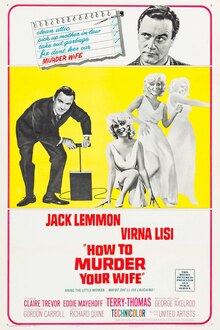
(It is worth noting in passing that this is rather different from one popular understanding of the principle, which has been used in several movies, such as How to Murder Your Wife (1965). This is the belief that a person tried and acquitted of the murder of a certain individual cannot be prosecuted for the crime a second time, and might therefore have a carte blanche to carry out the crime without fear of further prosecution. The point here is that the principle attaches to charges on the incident, not the person of the victim, so a prosecutor - at least in Scotland - would have been free to bring charges relating to the second incident. But what is good for law is not necessarily good for the movies...).


Now a central assumption of the recent reforms of double jeopardy laws in the UK is that there have been significant changes in the way that crime is investigated and that the criminal law is enforced. This primarily is the argument that with advances in forensic science new evidence (such as DNA evidence) may come to light that may allow the prosecution to secure convictions in cases where this might not have been possible at the time of the original trial. This may well be so. The convictions in the Lawrence case were based on the discovery of minute traces of blood linking the accused to the crime - and it seems to be the reason why the police are being asked to reopen the investigation in the Chhokar case. However, while this is significant we should not lose sight of the concerns that shaped Hume's beliefs. The criminal law should not be used as a cover for the original failings of police and prosecution, and it may still be used in an oppressive way even if we believe that we are on the side of justice.

The crucial factor here will, I think, be the question of how the safeguards in the 2011 Act are interpreted and applied. These operate in two ways. First, the statute, while reaffirming the general principle of double jeopardy, seeks to limit the grounds on which new prosecutions might be brought. These grounds are principally where the acquittal was found to be 'tainted' by the behaviour of a juror, where significant new evidence emerges, or where the acquitted person later confesses to having committed the crime. And second, the Crown must apply to the Court for permission to bring the second prosecution.

While no one should be allowed to get away with murder, there are nonetheless important legal principles at stake here which tell us something important about the society we live in. How this plays out over the coming months will be an important test of both sets of values.