Oblique intent

Why the name? Well criminal law afficionados will recognise the phrase 'oblique intent' as referring to a problem of mens rea:can a person who intends to do x (such as setting fire to a building to scare the occupants) also be said to have an intention to kill if one of the occupants dies? This is a problem that has consumed an inordinate amount of time in the appeal courts and in the legal journals, and can be taken to represent a certain kind of approach to legal theory. My approach is intended to be more oblique to this mainstream approach, and thus to raise different kinds of questions and issues. Hence the name.

Thursday, 15 November 2012

On the Verdict of Battle

I have just attended a fascinating seminar by James Whitman of Yale University based on his new book 'The Verdict of War'. The main argument of the book, briefly stated, is that up until the mid-nineteenth century war was understood as a means of settling property disputes, and battles were a form of wager, with the winner taking the spoils. The law of war, such as it was, was accordingly mainly concerned with determining the question of who had won, and trying to encourage broadly civilized conduct on the part of the combatants. And insofar as these were the ends, Whitman claims, it was broadly successful. A feature of pre-modern warfare was that battles were limited in time (no more than one day), and violence was confined to the battlefield and to uniformed participants - to the extent even that spectators would come from neighboring towns to watch. Of course, if you were a soldier it could be brutal, and it was accepted that the winners could loot the corpses on the field of battle and kill any survivors. This is then contrasted with modern warfare, where battles can go on for indeterminate periods, fatalities among non-combatants are routine, and there is no means for determining who has won other than trying to crush the enemy and secure unconditional surrender. This, controversially, is explained in terms of the collapse of monarchy and the rise of democracies and republics, where war is conducted in the name of the people - and the 'people' therefore become legitimate targets and will fight until they can fight no more.

There is a lot in this argument, and it is hard to do it justice in a short summary, but what particularly interests me is how the criminal law becomes part of this story.

According to Whitman, from the late nineteenth-century, humanitarian campaigners began to try and limit the horrors of war through the introduction of prohibitions on certain kinds of conduct - ensuring that survivors could not be killed or looted, introducing rules about the recognition of combatants and non-combatants and the limits of proper behavior in war. These kind of prohibitions now make up a substantial part of the modern law of war, as well as being linked to forms of international crime, such as crimes against humanity. While these are surely a great advance, Whitman questions the limits of the criminal law in this area. There are two aspects to this (and here the argument is my reconstruction of what I thought Whitman said, so may not be entirely accurate). First, it is not clear how useful or effective criminal law can be in a war situation, where you are dealing with scared or brutalized individuals. To be sure, these laws might provide for some limited redress afterwards, but we should be wary of claims that the law can guide conduct in war situations. Second, Whitman points out that this individualizes the law of war: it is no longer concerned with regulating conflicts between states, but with trying to determine just outcomes for individuals. The consequence of this is that the criminal law gets wrapped up in attempt to sanitize or humanize war. There are many reasons might we might want to do this - though better yet to avoid it altogether - but it is worth reflecting on whether the criminal law is an appropriate tool for for achieving these ends, or worse still, whether through this exercise we end up legitimating further violence.


Thursday, 8 November 2012

On 'the Gallows'

I have posted before about the fascinating project 'Punishing Photography', and I would strongly recommend that you visit the site and see how the work is developing. Yesterday was the opening at Barlinnie Prison of an installation from the project. This is not open to the public, but you can see a short video of this impressive and haunting piece of work here, and see some of the photographs and read descriptions of how the work has developed on the blog.

The installation will be open to the public at the Briggait in the spring of next year - watch this space for details.

Thursday, 1 November 2012

On joint enterprise


Those of us who work in the area of criminal law should never forget that the rules of criminal law have a profound impact on the lives of members of our society. This is brought home powerfully by this short film from campaigning group JENGbA (Joint Enterprise Not Guilty by Association).

The film (and the work of the group) highlights the large number of cases where individuals who appear to have been on the fringes of groups that have carried out killings have been charged with and convicted of murder, leading to heavy prison sentences. This is made possible because of the doctrine of joint enterprise.

This is a legal rule that basically holds that all those who are involved in a common enterprise can be held liable for the outcome of that enterprise provided that it is possible to demonstrate some sort of common purpose. Thus it is not necessary for the Crown to prove that the individual charged had the mens rea for the ultimate crime (say murder) provided that it can be proved that intended to share in the purpose or joint enterprise of the group. The existence of the rule is explained on the ground that where a group commits a crime it should not be possible for a member of that group to avoid liability. The rule is thus explicitly aimed at  groups or gangs where proof of membership or involvement may be enough to establish liability for crimes committed by the group.

But this is also where problems arise, because as JENGbA contend, there is evidence that the supposed social threat posed by gangs is being used to prosecute and convict individuals of serious crimes where, if they are guilty of anything at all, it is a much lesser involvement in the crime.

The question is what is to be done. This is an issue that has been looked at by the House of Commons Justice Committee, which has produced a report on the law and recommended both that the DPP produce guidelines for prosecutions in this area - and these have been promised - and that the law be placed on a sttautory footing. But while this has the potential to deal with future cases, by placing some sort of constraints on how the doctrine is used, it is not clear that this can deal with underlying problems with the doctrine itself.
Just as importantly, though, what will happen to those convicted under the use of this harsh and iniquitous doctrine?

Friday, 26 October 2012

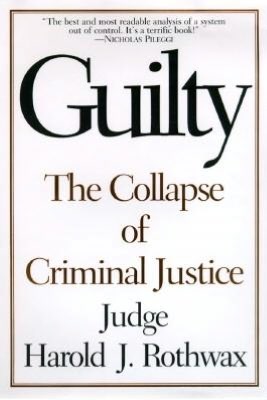
On the collapse of criminal justice

There is a genre of writing about criminal law and the criminal justice system that presents the story of modern criminal justice as one of decline. There was a golden age at some point in the past - though precisely when this was depends on the thesis being advanced in the book - and the subsequent history is presented as a fall from grace. Ideals of clarity, simplicity and justice are departed from as the system becomes increasingly complex and bureaucractised. And the solution is always to go back to the future, a return to the model of the past as a way of moving forward.

An excellent example of this type of narrative is William Stuntz's The Collapse of American Criminal Justice (2011), a work which has been highly praised by reviewers. The diagnosis of the ills of the system is a largely familiar one. It is highly discriminatory against poor and black individuals and communities; punishments are increasingly harsh; and the rule of law has been increasingly undermined by official discretion in law enforcement - from the police deciding who to stop and search to the use of plea bargaining to replace jury trials, to legislative practices which have allowed the creation of broad offence definitions which ease the practice of enforcement. These three factors interact as discretion reinforces discrimination. These are then read through a historical narrative which tells the story of the departure of criminal justice from Golden (or rather Gilded) Age ideals. Stuntz is too smart to completely romanticise the past, but he still anchors the account in an appeal to simpler times.

These simpler times are seen in what has become known as the 'Gilded Age', roughly between 1880 and 1930. And this is read for two main factors. First, he claims that the system was more democractic, in the sense that there was greater local accountability, and second he argues that this system actually fostered greater commitment to the ideal of equal protection before the law. His account of this is complex and nuanced, but basically boils down to the idea that law enforcement officers lived in the communities where they enforced the law and juries comprised of local citizens had greater freedom to interpret how legal norms could be applied then this represented a check on state power, which was gradually undermined as the system was bureaucratised and made less accountable. More controversially, he argues that the due process reforms of the Warren Court in the 1960s were wrong because they undermined the pre-existing commitment to equal protection before the law.

There is a nostalgia for the past in this kind of thesis, that inevitably underplays certain features of the historical systems in favour of those which are seen to support the argument. However, rather than challenge the history with an alternative interpretation (which I am not sure that I am qualified to do), I am more interested in the structure of the argument. First of all, the nostalgia here, the appeal to simpler times, is deeply conservative. In spite of Stuntz's admission that he is primarily concerned with contemporary problems, this kind of move seems to me to express a desire not to engage with the present, to avoid the complexity of now by turning back the clock. Indeed the argument in the book works best when it drops the historical comparison and simply looks with a critical eye at developments in sentencing or policing. Nostalgia also inevitably underplays the complexity of the past, as we can appeal to an image that reinforces our existing prejudices. There is not a genuine historical interest here, because the argument is already known. And this points to the third move - redemption. We can be saved if we believe, but then the argument is itself predestined.

For some reason this genre seems particularly prevalent in the US - try googling collapse of american criminal justice and see how many examples come up. This may just be because dramatic titles sell books (collapse, decline, fall, death), but it probably also connected to something deeper. There is a lingering distrust of the state, evidenced in the faith in the original words or motives of the framers of the constitution, or the persistent desire to see their political system through the lens of de Tocqueville (a French tourist who showered it with praise in the 1820s). This might even be seen as a faltering commitment to modernity. Whatever it is, it is important in engaging with this to think not just of content, but also the form in which it is expressed.

Thursday, 11 October 2012

On the (de-)criminalization of HIV transmission again

It occurs to me that the conclusion to the last post was rather rushed - a bit too oblique, if you like - and that I could have spelled out my concerns in more detail. I am also prompted to do this because I have been shown some further research on prosecutions for HIV transmission in Canada which underlines some of the points I was wanting to make in the post.

Criminalization or decriminalization in this area is always also about the distribution of responsibilities. Does the state take responsibilty for managing public health in this area, or does it pass the responsibility on to others - or does it share the responsibilities in an appropriate way? The use of the law in this area requires us to reflect on what it is that we seek to achieve through the use of the criminal law - the public health dimension, if you like. It is not only a matter of a harm being done to someone (the transmission of HIV), but also of whether the use of the criminal law is the best means of harm reduction. And in a situation where (at least) two people are involved, it is not always going to be easy to point the finger of blame at one of them. Who should take responsibilty for disclosure? Who is expected to take precautions (and who will be prosecuted for the failure to take precautions)? This also relates to our perception of who the victim is in a given situation, and who can be viewed as a perpetrator or which group of people represent a threat.

Answers to these kind of questions are given some content by research which has been carried out on who is prosecuted for the crime of HIV transmission in Canada and for what kind of sexual encounters. There is a lot of fascinating material in the report, but I want to pull out two key findings. These are first that in a high percentage of the prosecutions (40%) no actual HIV transmission had taken place - that is to say that the person was being prosecuted for an aggravated sexual offence where what was at issue was the risk of serous bodily harm. Second, the majority of those prosecuted were heterosexual men (around 70%) - which is to say those who were prosecuted on the basis of a heterosexual encounter - and in the period since 2004 the majority of these were black. In seeking to explain this last finding, the authors of the report make two observations. The first is that this might reflect differences in understandings of and respones to HIV risk between the gay and heterosexual communities. And second, they suggest that heterosexual women, and especially white heterosexual women, who are the complainants in many of these cases better fit police and prosecution conceptions of victims - and so the cases are more likely to be taken up.

So, if we go back to the discussion of the case, can we draw any further conclusion. It is arguable that the Court was trying to address the first point - decriminalising non-disclosure where there is no significant risk of transmission. But the real risk here is that this aim will be undermined by the lack of attention to the context in which sexual encounters take place and the failure to specify clearly where responsibilities lie. In fact it is arguable that the finding of the case - restoring the convictions against a black Sudanese immigrant where the female complainants testified about their fears - in fact reinforces the prejudices in this area.

The way forward must surely be shared responsibility for the disclosure and for the consequences of non-disclosure. Where no transmission takes place it is hard to see what is achieved through criminal prosecution - other than the reinforcement of prejudice. And even where there is transmission it is hard to see that the criminal law has a role to play, except in cases where this is deliberate and some overt deception or fraud has been used.

Monday, 8 October 2012

On the (de-)criminalization of HIV transmission

The recent judgment of the Supreme Court of Canada in the case of R v Mabior raises some interesting issues about the criminalization of HIV transmission. The case involved a man who was charged with nine charges of aggravated sexual assault under the Canadian Criminal Code for failure to disclose his HIV status to his sexual partners. In this case none of these sexual partners contracted HIV. There was also evidence either that a condom had been used, or that as the man was using retroviral drugs, his viral load was low and there was accordingly a low risk of transmission of the virus. The case accordingly concerned the questions of the degree of risk required to constitute the crime, and of the kind of risk might or might not be consented to and the sort of information that was necessary to make consent real.

He was initially convicted of aggravated assault, but on appeal the convictions were negated on the grounds that the low risk of transmission could mean that the offence had not been committed. The Crown appealed against this and the Supreme Court restored the convictions in four of the cases -where in spite of the low risk of transmission the complainants had testified that had they known of Mabior's HIV status they would not have had sex with him.

The case had been regarded as an important opportunity to reframe Canadian law on this issue. There was evidence to suggest that the level of prosecutions for this offence in Canada was high, and an unease about treating this as a serious life endangering offence in an era where improved drug treatment limited the impact of transmission. It is harder to argue that HIV is life endangering, at least in Canada and other western countries where the availability of retroviral drugs means that the illness can be managed. There was thus an argument that the offence had been drawn on overly broad terms, given its seriousness, and for limiting the role of the criminal law in this area.

The basic Canadian law in this area was established in the case of Cuerrier in 1998In this case the Supreme Court ruled that failure to disclose that one has HIV could constitute fraud vitiating consent to sexual relations under s. 265(3)(c) of the Canadian Criminal Code and amount to aggravated sexual assault (s.273). (This, I should add, is already a stretch. Section 265 talks about applying force to another, and aggravated sexual assault is defined in terms of wounding, maiming, disfiguring or endangering the life of another - none of which are terms that easily fit in this area). So, in order to establish a conviction, the Crown must show a dishonest act which affected the ability of the complainant to consent (lying about the one's HIV status) and that this endangered life.

The decision in Mabior does not change the basic law in this area - an intentional failure to disclose HIV status can still amount to aggravated sexual assault - but it does try to clarify the circumstances under which discloure of HIV status might be necessary. For the sake of simplicity, the new test can be understood as comprising an objective and a subjective element. Objectively the Court states that in order for it to be necessary to disclose your HIV status there must be a 'significant risk' of transmission. Accordingly, where the risk of transmission is low it may not be necessary to inform prospective sexual partners of your HIV status (though the judgment is somewhat vague here as to whether it is also necessary to use a condom). In the subjective part of the test (which is not so clearly expressed) the Court seems to indicate that consent should be informed - that sexual partners should have the information necessary to enable them to make and informed decision as to consent.

But is always necessary to use one?
And here we see the problem. While the Court is to be applauded for attempting to restrict the scope of the offence in the objective part, because it is not possible (as they acknowledge) to define the exact level of risk at which disclosure is not required, a lot will then depend on the subjective part of the test. But it is not clear this will limit the offence. In the appeal the convictions were restored because the complainants testified that they would not have slept with him even given the negligible risk of transmission if they had known of his HIV status. The scope of the offence thus depends on the fears of potential victims, apparently even if these are unreasonable - and the laudable aspiration to protect informed consent can quickly collapse into uninformed prejudice. A proper test in this area must be based on something more objective.

Thursday, 27 September 2012

On burglary

There have been eyebrows raised in response to the comments of Judge Michael Pert this week. While sentencing two men found guilty of burglary, he said that burglars who chose to burgle homes where the owner legally possessed a gun should accept the risk of being shot. In his exact words:
If you burgle a house in the country where the householder owns a legally held shotgun, that is the chance you take. You cannot come to court and ask for a lighter sentence because of it.
Joshua O'Gorman and Daniel Mansell,
who were shot in the course of burglary
Further comment then came this morning from Lord Chief Justice Judge, who responded to questions on the case by suggesting that burglary of a home was more than a crime against property, but was also a crime against the person:
It's not a matter of being sentimental. When you are at home you want to feel safe. You are entitled to feel safe and secure.
Sir Edward Coke:
"For a man's house is his castle..."
At one level this seems intuitively right - even without having to dress it up in the language of the Englishman's home being his castle, and so on. There might be two reasons for this. The first is present in LCJ Judge's statement, but might be spelled out more fully. This is that there is a difference between being in public and private spaces such as the home. When we venture out into public, we perhaps adopt a certain front or persona, we are ready for encounters or engagement with strangers. This might also be true of certain private spaces where we meet others. However, in our home, either on our own or with intimates, we generally do not feel the need to put on that front, unless perhaps we are inviting guests into our space - but even then there might be a different kind of negotiation, as we deal differently with friends or acquaintances and strangers. It is not just a matter of safety or security. One might feel safe in public, and a lot of feminist reserach has documented how for many women and children the home is not a place of safety. It is more that the uninvited entry of a stranger is a particular kind of transgression or threat. Thus at one level this might have nothing to do with property at all. It would be just as much of a threat to find an intruder in a hotel bedroom as in a home that you home. While a burglary of other kinds of buildings or dwellings houses would not be so threatening in the absence of people living there.

The second reason is also hinted at in the Lord Chief Justice's remarks, and is that a burglary might feel like a crime against the person. This might be because while we own or possess different kinds of property, we have a different kind of relation with them. I own some property which is in a sense 'disposable'. If certain kinds of property are taken they are easy to replace, and the lack of police interest, say, in tracking stolen bikes or even cars reflects this to some extent. But there are other kinds of property that might have less intrinsic value, but which have value to me because of their sentimental meaning or because I have worked on them or identify with the property in a certain way, and it would hurt me more to lose or have this stolen. And of course in our culture, our homes  represent a particular kind of investment. They are not just a structure in which to eat or sleep, but a particular place in which we ccan decorate and embellish as an expression of our identity - and to which we return at night to recover our sense of self. And it not then surprising that one often finds the victim of burglary reporting the sense of violation that they feel or the loss of a sense of security - the hurt goes far beyond the value of any property taken. So burglary, as with certain kinds of theft, might seem like a kind of invasion of the person.

But we should be careful where we go with this. Should a crime be treated as more serious becuase of the value of the property to the victim? Probably not, though it might at least be arguable that in some cases it might be worse to steal something (even of no value) that you know to be of value to the victim because, say, you want to hurt them.

But what about self defence?  The danger of going down this road of seeing threats to property as threats against the person is that we extend the scope of self defence, making it easier to see any intrusion or taking as a threat to self which would justify the use of (possbily fatal) force. It may be that, as LCJ Judge says, homeowners dealing with intruders should not necessarily have to hang around to find out the precise degree of threat offered by that intruder, But at the same time, many burglaries are routine and much of the property stolen is that which is 'disposable'  - not easily identifed and quickly convertible into cash (electronics etc). So we should be wary about defining our sense of burglary in terms of what might be an extreme or special case, and we should be especially wary about analogies which make it too easy to extend the scope of self defence.